Yoga is Political. Yoga is Action. Yoga is Community.
At YogaX we believe in working towards internal healing so that we can work on the external- the healing and transformation of our communities.
Check out our YogaX blogs.
What Does the Scientific Debate on Polyvagal Theory Mean?
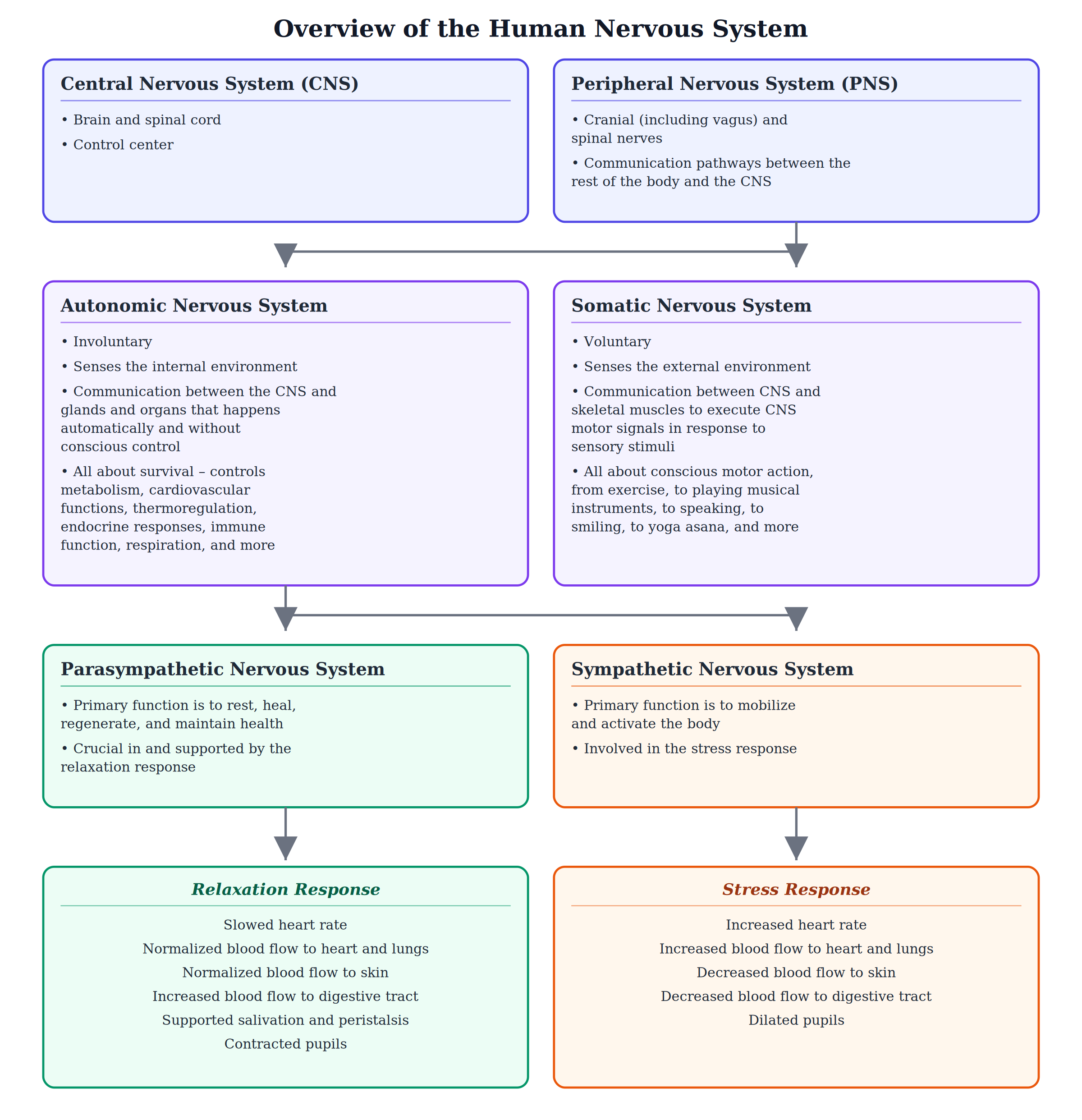
Do you remember the questions posed at the start of that earlier post? Do you feel calm, trusting, connected, part of a community? Or do you tend toward agitation, always ready for a fight or a flight? Or toward numbness, shutdown, a sense of being alone even in a room full of people? Those questions still matter. The nervous system patterns behind them are still real, still observable, and still central to why we teach yoga the way we do at YogaX. What has changed is the scientific conversation swirling around the framework we have long used to describe those patterns: polyvagal theory (PVT). Curious - read more.

Why 1,000 Hours of Yoga Training?
One long-standing confusion in the yoga world relates to training-hour counts for the profession of yoga therapy. Many yoga therapy programs advertise themselves as 800-hour trainings, especially those accredited by the International Association of Yoga Therapists (IAYT). While this description is technically correct, it can be misleading given the universal prerequisite of a 200-hour foundational yoga teacher training. Taken together, most routes to yoga therapy certification involve roughly 1,000 hours of training: 200 hours of foundational YTT + 800 hours of specialized yoga therapy training. This is more than a bookkeeping detail. The full 1,000 hours reflect the depth of preparation, scope of practice, and readiness needed to work as a yoga therapist in healthcare and community health settings.
What Is the Spectrum of Yoga Services?
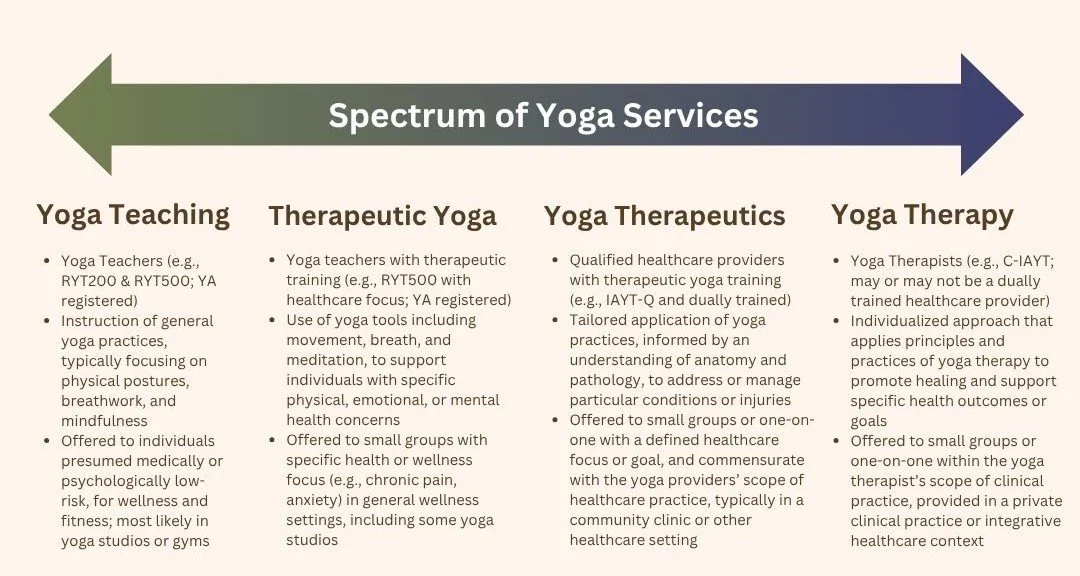
Services that can be provided by yoga professionals range widely, are often misunderstood, and may be confusing to the public and to healthcare providers whose patients may benefit from one type of yoga service but not another. It helps to look at this range of services from the perspective of scopes of practice and educational backgrounds of yoga professionals. The range can be roughly shown as a continuum from yoga teaching to yoga therapy, with therapeutic yoga teaching in the center – leaning toward the teaching end of the spectrum; and therapeutic yoga applications in healthcare – leaning toward the yoga therapy end of the spectrum.

Why Bring Yoga Into Healthcare?
Integration of yoga into healthcare settings presents an innovative and multifaceted opportunity to revolutionize at least some of the challenges within current healthcare systems. Yoga’s core principles are uniquely aligned with a commitment to comprehensive, coordinated, and integrated person-centered preventive and supportive care while enhancing provider wellbeing. The integration of yoga’s ancient wisdom into modern healthcare can create a more resilient healthcare ecosystem that places emphasis on integrated and holistic wellbeing and lifestyles for patients and care providers alike.