

Breathe, Move, Restore
An Accessible Guide to Integrated Holistic Yoga for Stress, Strength, Balance & Wellbeing
Integrated Holistic Yoga
Simple Practices for Breathing, Movement, Nervous System Balance
& Whole-Person Wellbeing
Yoga for everyday life, is more than stretching; it is a whole-person lifestyle practice that can support your body, breath, mind, emotions, nervous system, and sense of connection.
This guide offers simple starting points. These are brief, accessible introductions to practices that can be adapted to your body, health needs, culture, abilities, and lived experience.
Yoga may be helpful if you want to:
* Improve strength, balance, flexibility, mobility, and posture
* Reduce stress, tension, anxiety, or pain
* Support energy, mood, focus, memory, and coping
* Build a more compassionate relationship with your body and mind
* Develop a sustainable self-care practice
Integrated Holistic Yoga is rooted in accessibility, intentionality, beneficence, wholism, and integration. It understands the body, breath, mind, emotions, relationships, and environment as interconnected parts of human wellbeing.
What Does a Yoga Lifestyle Practice Look Like?
In yoga, a personal practice is sometimes called sadhana. This simply means a regular practice that supports your wellbeing and helps you live with more awareness, steadiness, and care.
Your practice does not need to be long, fancy, athletic, or perfect. It can begin with:
* A few minutes of quiet breathing
* Gentle movement in a chair, on the floor, or standing
* A mindful pause before reacting
* A short rest practice
* A moment of gratitude, compassion, or reflection
The goal is not to force your body into shapes. The goal is to build a practice that helps you feel more present, regulated, resilient, and connected.
Benefits of Yoga
Yoga may support the body by helping improve:
Strength and muscle tone
Flexibility and mobility
Balance and coordination
Posture awareness
Back, neck, and joint comfort
Sleep and fatigue
Healthy aging and daily function
Yoga may support breathing and the nervous system by helping:
Slow and soften the breath
Reduce stress and tension
Increase feelings of calm and grounding
Support energy regulation
Improve breathing awareness and efficiency
Yoga may support mental and emotional wellbeing by helping:
Improve focus and concentration
Reduce stress and anxiety
Support emotional balance
Build coping skills and resilience
Encourage connection with self and others
Yoga Works on Multiple Levels
Yoga supports different layers of human experience:
Physical Body — Annamaya
Movement, strength, posture, mobility
Breath & Energy — Pranamaya
Breathing patterns, nervous system regulation, vitality
Mind & Emotions — Manomaya
Thoughts, feelings, stress, reactivity
Awareness & Insight — Vijnanamaya
Noticing patterns, pausing, choosing wisely
Wellbeing & Connection — Anandamaya
Groundedness, ease, meaning, joy, connection
Yoga works by supporting all of these layers through movement, breathing, awareness, reflection, and compassionate action.
A Gentle Safety Note
Yoga and breathwork should be adapted to you. Please consult a qualified healthcare provider before beginning or changing your practice if you have a medical condition, recent injury or surgery, pregnancy, uncontrolled blood pressure, breathing disorder, dizziness, panic symptoms, or any concern about whether a practice is appropriate for you.
Stop and return to natural breathing or rest if you feel pain, dizziness, breathlessness, panic, numbness, or distress.
Three Simple Steps to Start Practicing
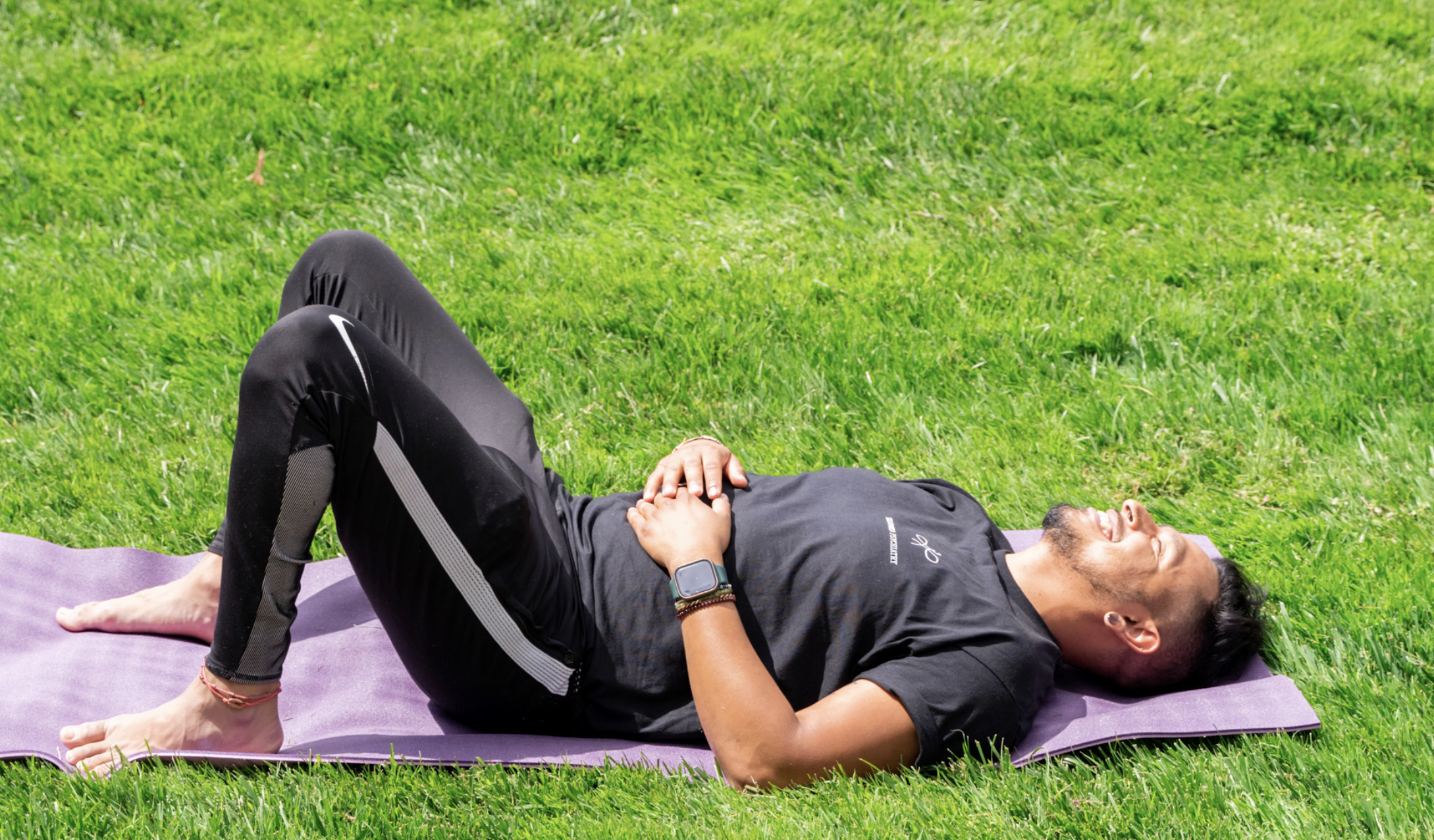
2. Gather Your Essentials
You do not need expensive equipment. A few simple supports can help.
Mat: A sticky yoga mat can reduce slipping.
Comfortable clothing: Choose clothes that allow easy movement and breathing.
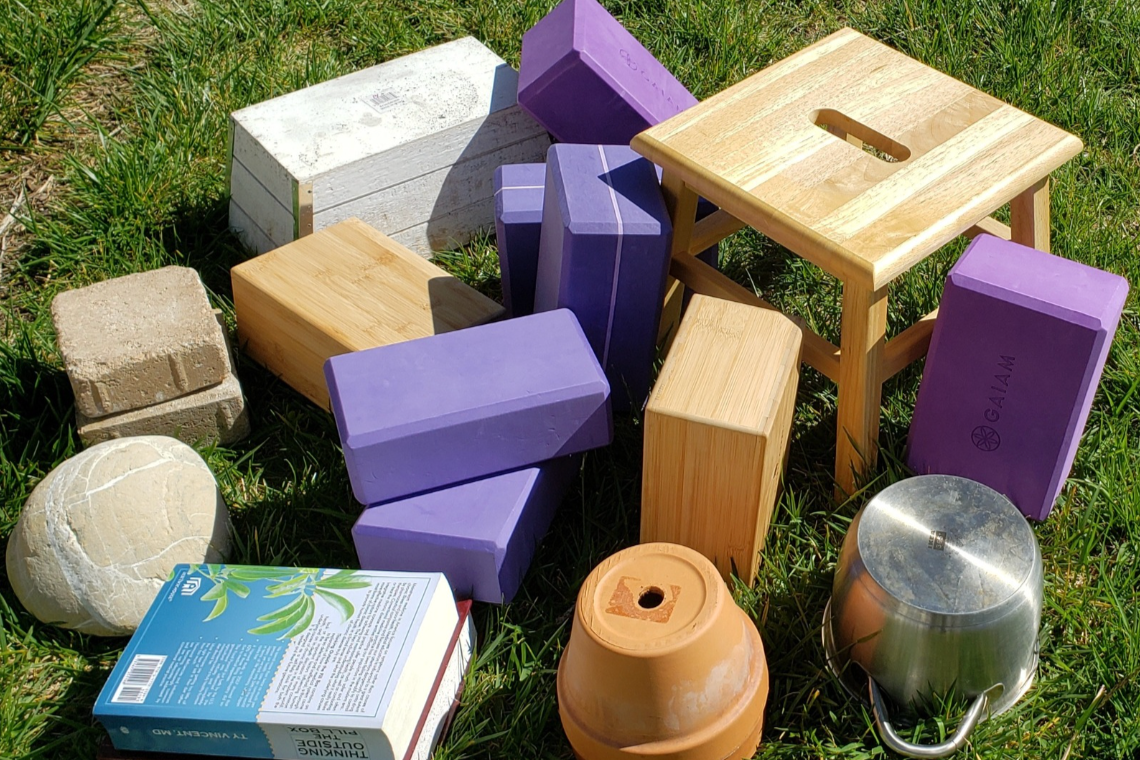
Props: Helpful options include yoga blocks, a thick book, a towel, a belt, a strap, pillows, blankets, or a chair.
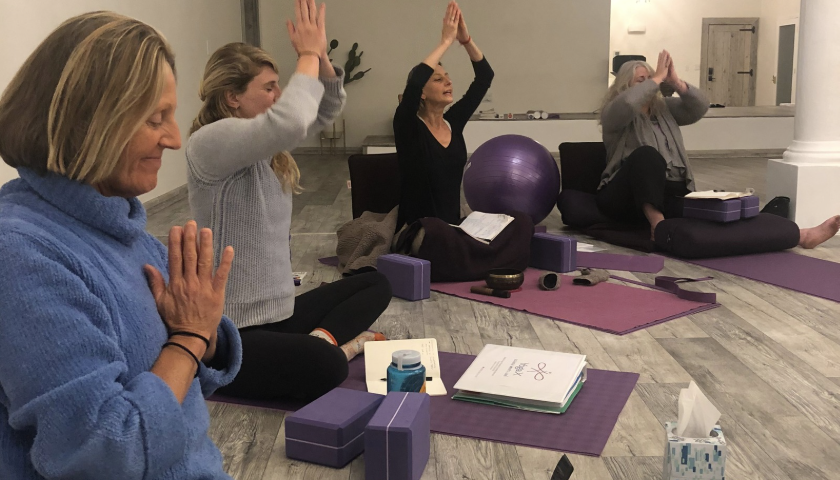
1. Explore Your Options and Find Your Space
Choose a quiet place where you can practice safely and without interruption. Turn off notifications if possible. This time is for you.
You may begin with:
A short YogaX class or breath practice
A few gentle postures
A guided relaxation
A breathing awareness practice
Choose practices that feel accessible, supportive, and appropriate for your body today.
3. Set a Meaningful Intention
Remember that sustainability matters more than intensity.
Perhaps you start with 10–15 minutes, one to two times per week. Over time, you can slowly build from there.
Listen to your body. Yoga should not create sharp pain, dizziness, panic, or strain. If something hurts, back off or choose another option.
Let your breath guide you. If you are holding your breath, clenching, or pushing too hard, soften. Remember that a steady, easeful breath is part of the practice.
Breath Awareness
Accessible Breathwork for a Balanced Body and Mind
Breath awareness is often the first step in therapeutic breathwork. Before trying to change your breath, begin by noticing it.
Ask yourself:
Am I breathing through my nose or mouth?
Is my breath soft or strained?
Is my breath quiet or loud?
Do I feel movement in my belly, ribs, chest, shoulders, or neck?
Does my breath feel smooth, rushed, held, or uneven?
Therapeutic breathwork emphasizes person-centered practice. Breath practices should be adapted to the individual, and breath observation is an important first step before more structured techniques.
Optimal Functional Breathing
A helpful everyday breath is often:
Nasal — breathing in and out through the nose when possible
Diaphragmatic — allowing gentle movement in the belly and lower ribs
Slow — often around 5.5–10 breaths per minute, without forcing
Light and quiet — soft, subtle, and not overly deep
Rhythmic — steady, smooth, and balanced
Therapeutic Breathwork describes optimal functional breathing as nasal, diaphragmatic, slow, subtle, and rhythmic, with a balance of ease and effort.
Why Practice This Way?
Soft, slow, rhythmic breathing may support:
A calmer nervous system
Reduced perception of stress
Better emotional balance
Improved focus and concentration
More efficient breathing
Cardiovascular and pulmonary functioning
A greater sense of steadiness and wellbeing
Avoid forcing the breath. Bigger breaths are not always better. In many cases, subtle, quiet breathing is more supportive than deep or effortful breathing.
Simple Breath Practices
Breath Practice 1: Soft Nose Breathing
Sit or lie down comfortably.
Breathe in and out through your nose if available to you.
Let the breath be quiet.
Relax your jaw, shoulders, belly, and hands.
Notice the natural rhythm of your breath.
Practice for 1–3 minutes.
Breath Practice 2: Four-Part Breathing
This practice includes four phases:
Inhale
Pause
Exhale
Pause
Begin gently. You might try a count of 2 or 3 instead of 4.
Example:
Inhale through the nose for 3.
Pause softly for 3.
Exhale slowly for 3.
Pause softly for 3.
Do not strain or hold the breath forcefully. If you feel anxious, dizzy, or uncomfortable, return to natural breathing.
Breath Practice 3: Humming Breath
Inhale gently through your nose.
Exhale slowly while making a soft humming sound.
Feel the vibration in your face, throat, chest, or head.
Repeat 3–6 rounds.
Keep the sound gentle, not forced.
Inner Practices of Yoga
How Yoga Supports the Mind and Nervous System
Yoga also includes inner practices that help you pause, notice, focus, and respond with more awareness.
These practices are not about emptying the mind or forcing calm. They are about building a kinder relationship with your experience.
Pratyahara: Creating a Low-Stimulation Space
Pratyahara is sometimes described as turning inward or gently guarding the senses.
Try:
Turning off notifications
Practicing in a quieter room
Dimming lights
Reducing background noise
Taking a break from screens
Ask: What can I simplify in my environment so my nervous system can settle?
Dharana: Focused Attention
Dharana means concentration.
Try focusing on:
The breath
A body scan
A candle or object
A word or phrase
The feeling of your feet on the floor
Ask: Where is my attention right now? Can I gently bring it back?
Dhyana: Meditation
Dhyana is meditation — a more spacious awareness that can grow from steady attention.
Try:
Lovingkindness meditation
Compassion practice
Guided imagery
Quiet breath awareness
Resting in open awareness
Ask: Can I be present with what is here, with kindness?
Integrated Holistic Yoga Movement
Accessible Yoga Postures for Body, Mind, and Emotions
Yoga movement combines breath, awareness, and posture. The purpose is not to perform a perfect shape. The purpose is to move with curiosity, care, stability, and ease.
Integrated Holistic Yoga Movement emphasizes that movement affects the whole person — body, breath, nervous system, emotions, thoughts, and relationships — because human systems are interconnected.
Move in a way that feels:
Grounding
Stabilizing
Spacious
Breath-supported
Adapted to your body
Use the “middle way”: not too much effort, not too little. Let the breath help you find the right amount.
Lying Down Practices
Knees to Chest
Lie on your back.
Bring one or both knees toward your chest.
Hold behind the thighs or around the shins.
Take slow, easy breaths.
May help: low back tension, grounding, calming.
Figure-4 Stretch
Lie on your back.
Cross one ankle over the opposite thigh.
Gently draw the legs toward you if that feels comfortable.
Keep the shoulders relaxed.
May help: hip tightness, low back comfort, relaxation.
Gentle Spinal Twist
Lie on your back.
Bring one knee across your body.
Let the shoulders feel heavy.
Breathe slowly and gently.
May help: back tension, relaxation, gentle mobility.
Resting Pose
Lie comfortably.
Place a pillow under your knees if helpful.
Let the body soften.
Allow the breath to return to its natural rhythm.
May help: deep rest, nervous system recovery, fatigue.
Seated Practices
Seated Cat-Cow
Sit tall.
Inhale and gently lift the chest.
Exhale and gently round the back.
Move slowly with the breath.
May help: spine mobility, tension relief, mood support.
Seated Twist
Sit tall.
Gently turn to one side.
Keep the movement comfortable and easy.
Breathe softly.
Repeat on the other side.
May help: back and shoulder tension, spinal mobility.
Seated Side Stretch
Reach one arm overhead.
Lean gently to the side.
Breathe into the side ribs.
Repeat on the other side.
May help: breathing space, side-body tension, posture awareness.
Standing Practices
Mountain Pose
Stand tall with your feet grounded.
Let your arms rest by your sides.
Notice your breath.
Feel the contact between your feet and the floor.
May help: grounding, posture awareness, steadiness.
Supported Tree Pose
Stand near a wall or chair.
Shift weight into one foot.
Place the other foot lightly on the floor, ankle, or calf.
Use support as needed.
May help: balance, focus, confidence.
Chair Pose
Stand with feet grounded.
Bend the knees slightly as if sitting back.
Keep the chest lifted.
Breathe steadily.
May help: strength, energy, leg stability.
Yoga Classes on YouTube
-
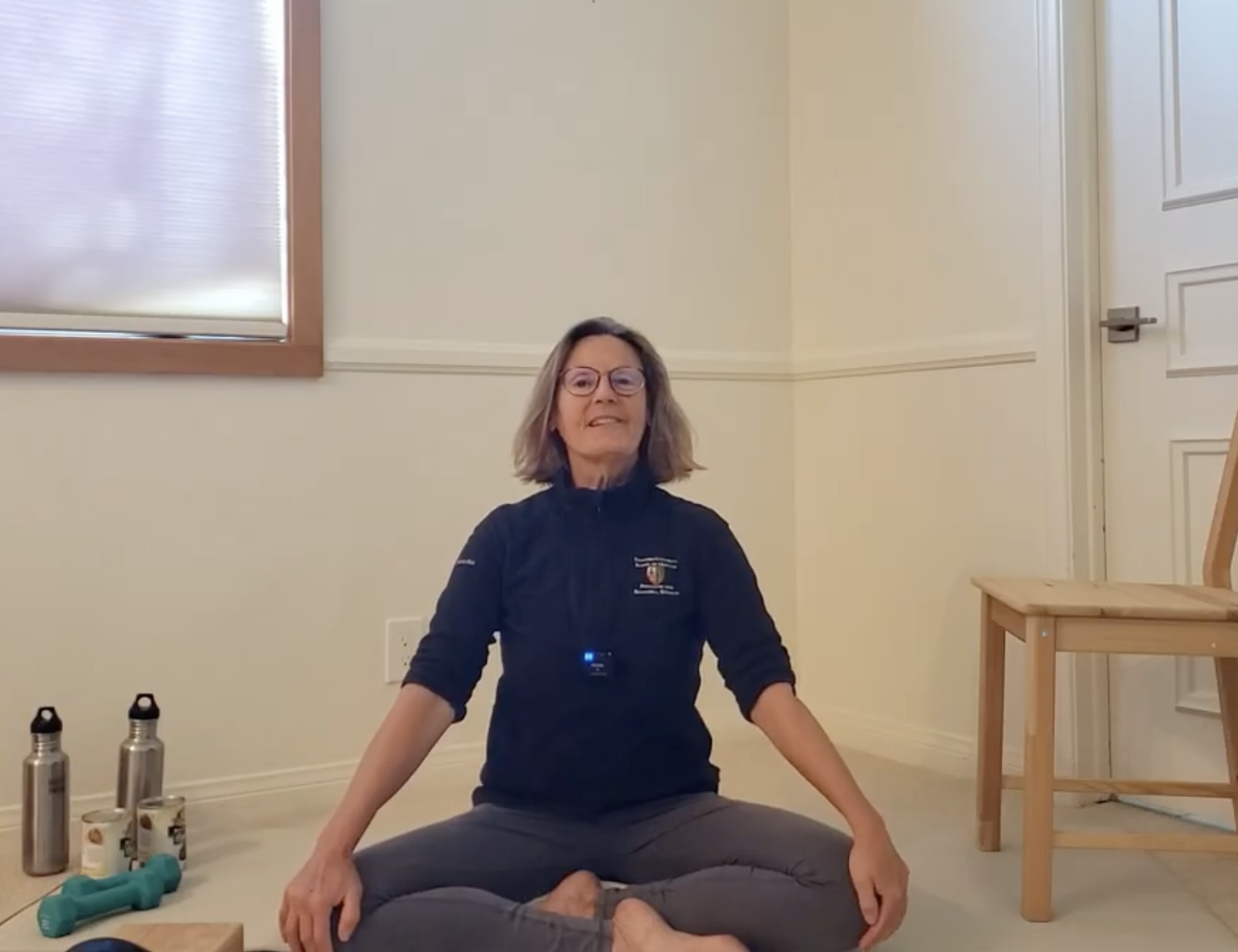
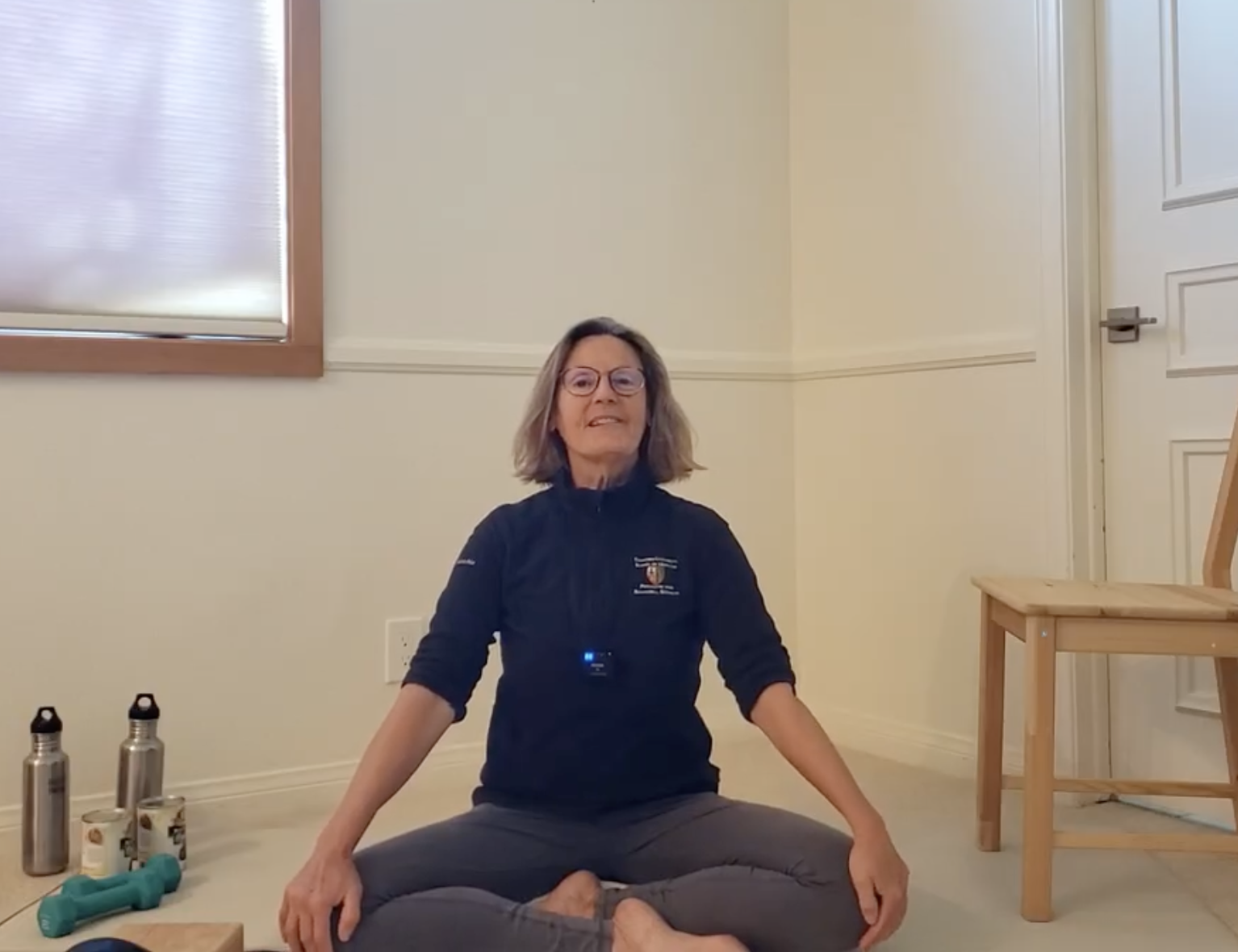
![A woman in a black jacket practicing yoga on the floor with legs crossed, smiling, in a room with a window, chair, and water bottles.]()
Yoga For Strength
This class is dedicated to the cultivation of strength. We will explore strength not only as the capacity to exert force, but also the ability to remain steady, adaptable, and engaged through the physical, energetic, emotional, and mental demands of life.
-
A practice accessible to everyone
-
A practice with profound benefits
-
A practice of intentional lifestyle choices
-
A practice of wholeness
-
A practice of integration